
Google Business Profile Ownership Guide
Keep the profile controlled by the business, accurate for customers, and recoverable when people or providers change.
A Google Business Profile can influence discovery, calls, directions, reviews, and customer confidence. It should not depend on one employee, a personal inbox, or an agency account the business cannot access. Ownership is an operational control: the company needs primary authority, role-based access, accurate information, and a recovery record.
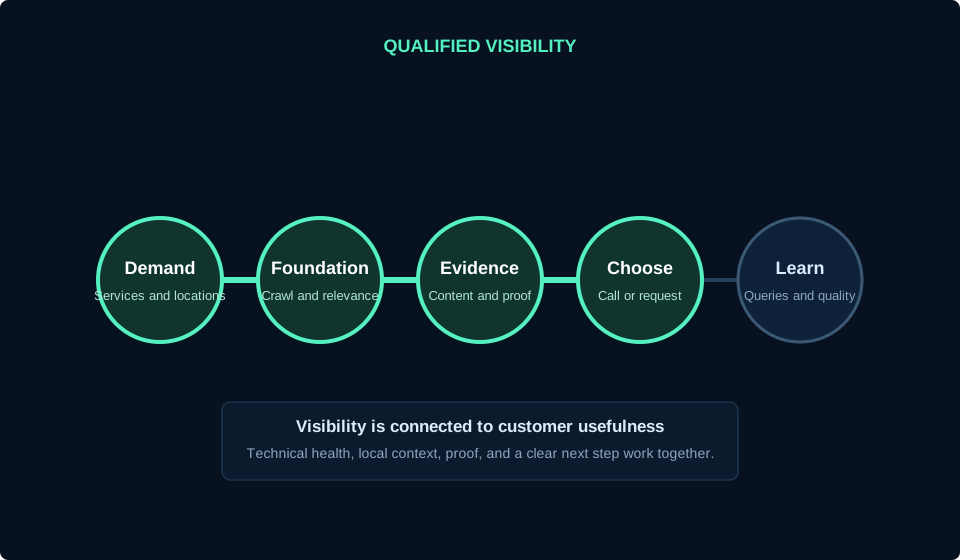
Put primary ownership in company control
Use a durable company-controlled Google account for primary ownership. Protect it with current recovery methods and multi-factor authentication. Individual staff and providers should receive the minimum role they need rather than sharing a password or becoming the only owner.
Record the profile URL, business group, primary owner, managers, recovery email, recovery phone, verification history, and where supporting business documents are stored. Review access when a staff member changes roles or a provider relationship ends.
Primary owner
The business retains primary ownership through an account it controls and can recover.
Role-based access
Staff and providers use individual accounts with only the permissions needed for their work.
Access review
Managers, owners, recovery methods, and connected tools are reviewed at least quarterly and after every personnel change.
Keep identity and eligibility accurate
Use the real-world business name and the most accurate primary category. Configure an address or service area according to current Google eligibility rules. Keep the website, phone, hours, holiday hours, services, and appointment links current. Avoid virtual offices, duplicate profiles, or keyword additions that do not match the real business identity.
Major edits can trigger re-verification or review. Make one controlled change at a time where practical, preserve screenshots and supporting records, and verify that calls and website links still reach the right destination after publication.
Identity
Name, category, location model, and contact details match how the business operates and presents itself offline.
Customer facts
Hours, service areas, services, attributes, appointment paths, and temporary closures are maintained.
Evidence
Business registration, signage, utility, licensing, and other appropriate verification materials are stored securely.
Create a safe publishing and response workflow
Assign owners for profile updates, photos, posts, questions, messages if enabled, and review responses. Establish a small approval rule for sensitive topics such as disputes, safety, legal claims, pricing disagreements, or customer personal information.
Responses should be calm, factual, and careful not to expose private project details. A public reply can acknowledge the concern and offer a private path without deciding contested facts in public. Escalate issues that require operational, insurance, or professional review.
Publishing owner
One person or team owns routine accuracy and a second owner approves sensitive changes.
Review response
Use factual, privacy-aware language and move project-specific discussion into an appropriate private channel.
Incident path
Suspension, hijacking, duplicate listings, unauthorized edits, and review abuse have a documented escalation record.
Plan for provider handoff and recovery
A provider should never make continued access conditional on the relationship. Before work begins, agree that the business retains ownership, data access, reporting, connected phone numbers, landing pages, and the ability to remove provider users without losing the profile.
At handoff, export available performance data, document open issues, remove obsolete users, rotate any shared credentials, confirm destination links, and test calls. If ownership is disputed, use Google support and documented business evidence rather than creating a duplicate profile.
Written ownership
The agreement names the business as owner and lists each provider account, role, asset, and handoff responsibility.
Connected systems
Call tracking, scheduling, UTM links, analytics, messaging, and landing pages have known owners and replacement steps.
Recovery drill
The business can identify the profile, sign in, reach recovery methods, and remove a provider without guesswork.
Use this before the next decision.
- Company account is primary owner
- Multi-factor and recovery methods are current
- Every owner and manager is documented
- Name, category, location model, and hours are accurate
- Website and phone destinations are tested
- Sensitive response escalation is defined
- Supporting verification records are secure
- Provider removal and handoff are documented
Related guides
Connect profile ownership to the wider local visibility plan.
A well-controlled profile works best when the website, services, locations, reviews, calls, and reporting tell the same accurate story.