

Local SEO Checklist for Service Businesses
Build local visibility around accurate business information, useful service content, and measurable customer actions.
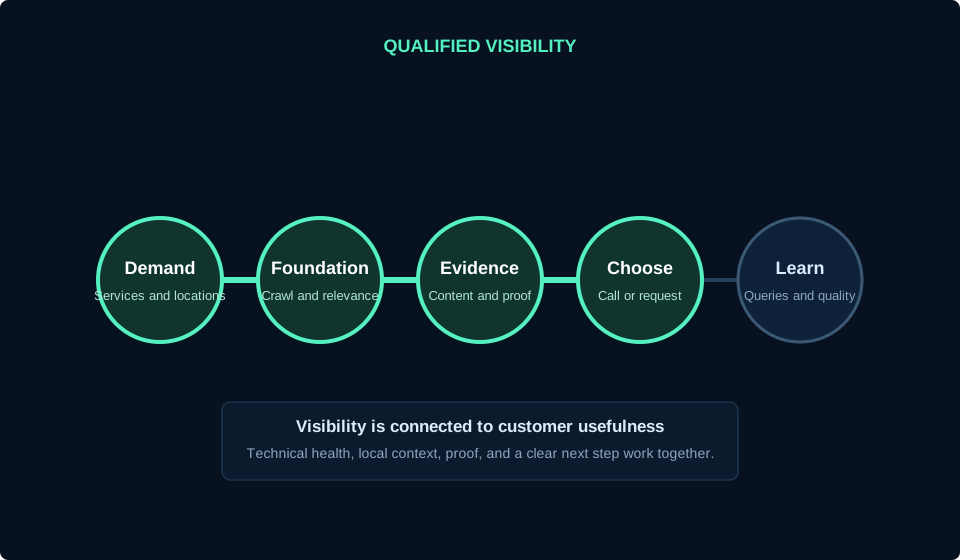
Local SEO works best as an operating discipline, not a one-time collection of keywords. Search engines need to access and understand the site, customers need accurate information and useful evidence, business profiles need consistent ownership, and the company needs a way to distinguish qualified inquiries from noise.
Confirm technical access and indexation
Start by checking whether the important pages can be crawled, rendered, indexed, and reached through internal links. Review Search Console coverage, canonical tags, redirects, duplicate routes, mobile behavior, Core Web Vitals, structured data, and the difference between public marketing pages and account or checkout screens that should not appear in search.
Do not treat every warning as equally urgent. Prioritize defects that hide key services, produce the wrong page in search, break mobile conversion, or make the business entity ambiguous. Keep a record of the change, the expected effect, and the date it can reasonably be reviewed.
Crawlability
Verify robots directives, sitemaps, navigation, status codes, canonicals, and server rendering for every priority page.
Page quality
Require one useful topic, one clear H1, unique metadata, descriptive links, and no accidental duplicate route.
Experience
Test speed, layout stability, keyboard use, forms, calls, and mobile tap targets on representative devices.
Make services and geography understandable
Describe each priority service in the language customers use when deciding whether to call. Include suitable situations, process, evidence, common questions, and the next step. Mention locations where the business actually operates, but do not create thin city pages that only swap place names.
A strong location page needs unique operating context: travel boundaries, common property types, permitting or climate considerations when relevant, representative work, and accurate contact information. If that information does not exist, a well-structured service area section may be more useful than dozens of weak URLs.
Service entities
Give each priority service a complete page and connect it to relevant work, resources, locations, and conversion paths.
Service area truth
Publish only the regions the team can actually serve and explain any travel, scheduling, or project restrictions.
Internal links
Connect related pages with descriptive text that helps people understand why the next page matters.
Operate the Google Business Profile carefully
The business should control the primary Google Business Profile through a company-owned account and grant role-based access to staff or providers. Keep the business name, category, address or service area, phone, website, hours, and services accurate. Preserve a record of owners, managers, verification methods, and major changes.
Photos, posts, questions, and service updates can support customer confidence, but they do not replace accurate fundamentals. Avoid adding keywords to the business name when they are not part of the real-world name, using addresses that are not eligible, or creating duplicate listings for the same operation.
Ownership
Use a company-controlled primary owner and review every manager or agency access at a regular interval.
Accuracy
Match the real business identity, contact paths, hours, service areas, categories, and customer-facing policies.
Change control
Document profile edits, verification requests, suspensions, reinstatement materials, and who is responsible for responses.
Connect reputation and measurement to operations
Ask real customers for honest reviews through a consistent, platform-compliant process. Do not offer incentives for positive sentiment, suppress negative customers, or have staff and vendors create reviews. Define who monitors feedback, who can respond, and which complaints need operational or professional review.
Measure calls, forms, bookings, and qualified opportunities where consent and provider rules allow. Review lead quality with the people handling the inquiries. Rankings and traffic can provide diagnostic context, but the business decision should connect visibility to useful customer actions and the capacity to respond.
Review workflow
Choose an appropriate customer moment, make the request neutral, and preserve a fair response and correction path.
Conversion events
Track useful actions without sending form text, names, phone numbers, or other personal information to analytics.
Monthly review
Discuss visibility, engagement, lead quality, missed calls, response time, and operational capacity together.
Use this before the next decision.
- Priority pages are crawlable and indexable
- Transactional pages return noindex
- Sitemap includes only canonical public URLs
- Services and locations are described truthfully
- Google Business Profile ownership is documented
- Business information is accurate and consistent
- Review requests follow platform rules
- Calls and forms have responsible owners
- Reporting includes qualified lead feedback
Related guides
Turn the checklist into a prioritized local growth backlog.
HostAvvy can connect technical fixes, profile operations, service content, reputation, and lead measurement into one practical plan.